
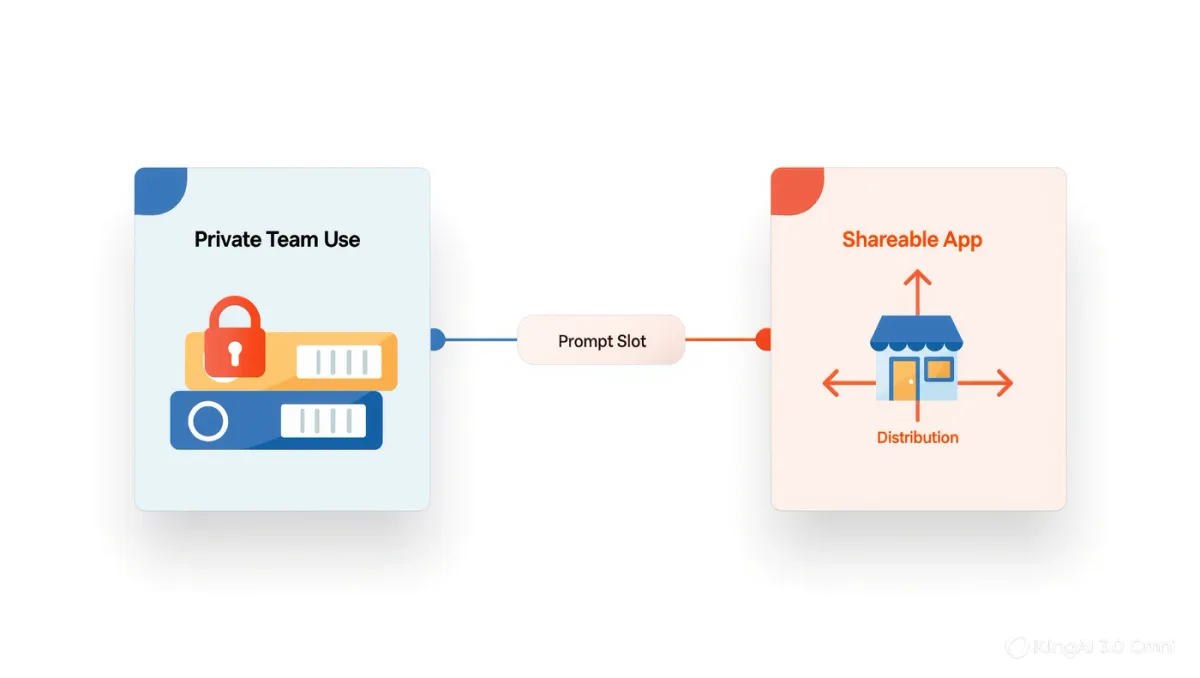
Claude Projects and ChatGPT's custom GPTs solve the same problem — packaging instructions plus reference documents into a reusable assistant instead of pasting context every session — and per each vendor's documentation, the practical difference is scope: Projects are built around a shared knowledge base of uploaded files and project instructions inside Claude's interface, while custom GPTs are built around configurable behavior and capabilities that can be shared with other users or the public GPT Store. Pick by what you feed it and who else needs it, not by which chatbot you like more.
RechargeMe publishes information, not advice. Everything below is sourced to the vendors' own product documentation as of late 2025; both products ship changes frequently, so verify limits on the current pages before committing a team workflow to either.
What is a Claude Project, per its documentation?
A workspace inside Claude where you set custom instructions once and upload a set of project files — documents the assistant draws on in every conversation within that project. Anthropic's documentation emphasizes the knowledge base: files stay attached to the project, conversations inside it share that context, and paid tiers raise the number of projects and their storage. The mental model is a filing cabinet with a clerk: the files are the furniture, the instructions are the job description, every conversation opens the same drawers.
What is a custom GPT, per OpenAI's documentation?
A configured variant of ChatGPT: instructions, conversation starters, uploaded knowledge files, and toggled capabilities like web browsing or image generation, assembled without code. Two distribution modes define it — private, for your own account or a workspace, and publishable, to the GPT Store for anyone to use. That sharing axis is the structural difference from Projects: a custom GPT is a distributable app-shaped object, while a Project is a personal-or-team workspace-shaped one. OpenAI's developer documentation also notes usage limits tied to your plan: builders on free plans face stricter caps on how often their GPTs can be used, including by others.
How do the knowledge bases compare?
Both accept file uploads that the assistant searches during conversations, and both impose file-count and size limits that depend on your tier, per their respective documentation. The meaningful differences are retention and audience. Files in a Project serve you and teammates you explicitly add, in the context of that project. Files in a shared GPT travel with the GPT to strangers, which makes them a publishing decision, not just an upload — OpenAI's guidance for GPT builders explicitly warns against including private data in GPTs you share. Same mechanic, different blast radius.
| Dimension | Claude Projects | Custom GPTs |
|---|---|---|
| Core shape | Workspace + shared knowledge base | Configured assistant, shareable app |
| Instructions | Project-level, per project | GPT-level, ships with the GPT |
| Files | Project-private, tier-limited | Private or public-with-the-GPT |
| Distribution | Invite teammates to the project | Keep private or publish to GPT Store |
| Best fit | Recurring work over a stable document set | Repeatable tasks you or others rerun anywhere |
Related stories: Which Claude tier for which work? A decision guide from Anthropic's own pricing page · NotebookLM for long PDFs: what Google documents about limits and citations.
What about data-use terms?
The chapter people skip and shouldn't. Both vendors publish data-usage policies with consumer-vs-business distinctions: by default, consumer-tier conversations have historically been usable for model-improvement unless you opt out, while enterprise tiers and API traffic carry stronger no-training commitments — check the current versions of both vendors' privacy and data-usage pages, because the defaults and the opt-out locations have changed repeatedly. The general principle both vendors document: the more you are paying for organizational controls, the more those controls exist. For a knowledge base containing client material, that difference is the decision, not a footnote.
Which fits which kind of recurring work?
A stable corpus, one owner or a small team, outputs for internal use — Project territory: contracts to reference, style guides to enforce, research to summarize against. A repeatable behavior you want anywhere — a formatting bot, a tutor, a domain helper others benefit from — custom GPT territory, published or kept private as suits. And if your choice is driven by which underlying model writes better for your material, the honest answer is that model preferences are legitimate input; just date the decision, because both vendors' default models change under the same interface.
What the documentation doesn't settle
Relative retrieval quality — how well each product finds the right passage in your uploaded files — is not benchmarked by either vendor in comparable terms, and independent head-to-heads of these container features are scarce. Both documents say "the assistant uses your files"; neither quantifies when it doesn't. For load-bearing work, the mitigation is the same in both: cite-or-quote instructions in the prompt ("quote the relevant passage before answering") so failures of retrieval are visible instead of silent.
FAQ
- Can I move a Project to a GPT or back? Not directly — there is no documented import path; you rebuild the instructions and re-upload the files on the other side.
- Do uploads train the model? Per both vendors' current data-usage pages, consumer defaults have allowed training use with opt-outs, while business tiers restrict it — read the live policy for your exact plan before uploading sensitive material.
- Is one cheaper? Both come with paid subscriptions whose tiers set limits on projects, storage, and usage; compare the current pricing pages against your volume rather than trusting a snapshot.