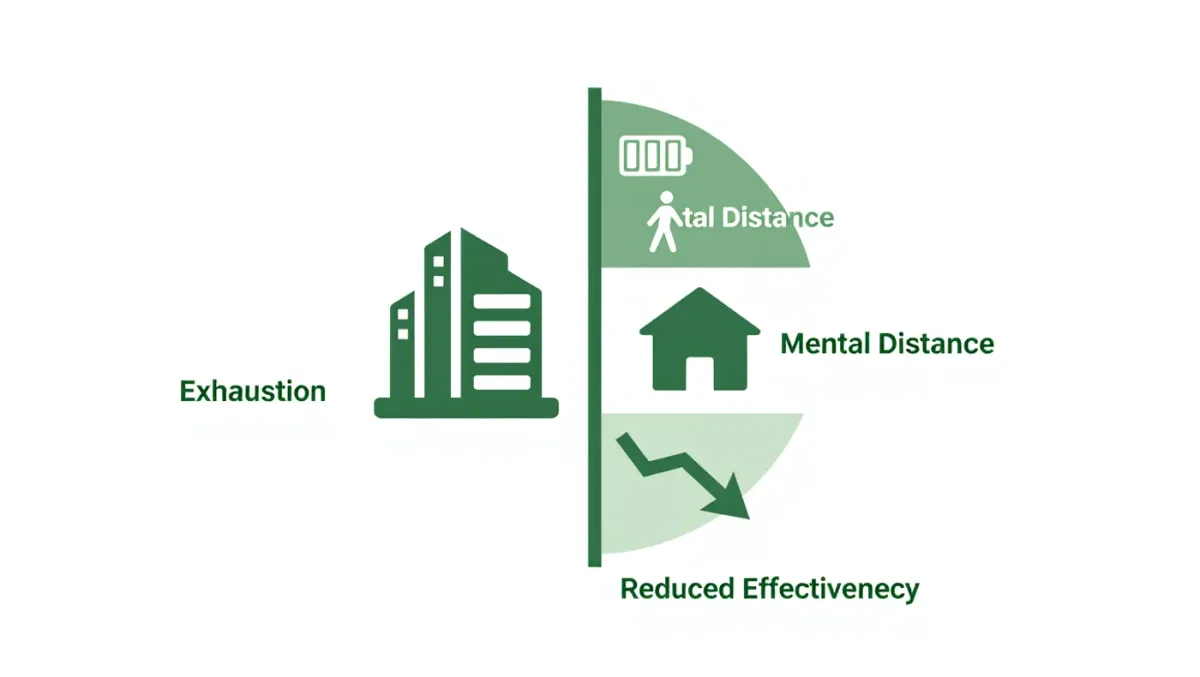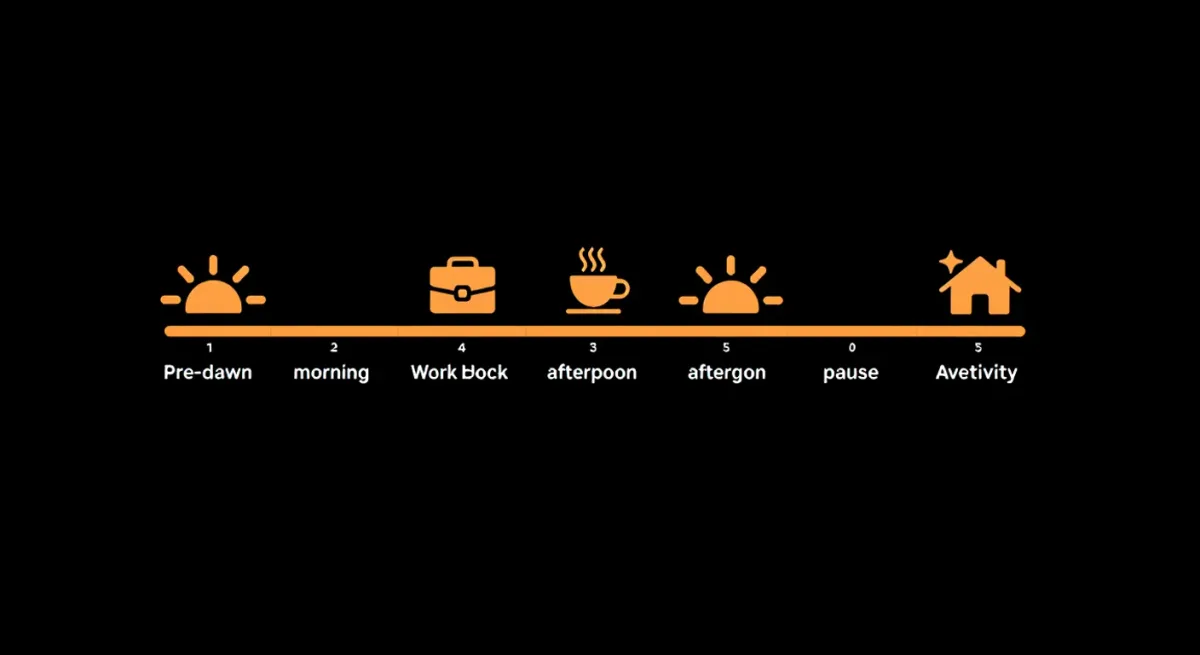

The documented relationship between after-hours connectivity and burnout was established years before consumer AI — organizational research, including widely cited work on "telepressure" and the World Health Organization's recognition of burnout as an occupational phenomenon, links always-available expectations to exhaustion and disengagement — and what AI tools add is not a new pressure but the removal of the last frictions that made boundaries survivable: drafting a reply now takes a minute, an assistant works while you sleep, and "quick question" answers arrive instantly at any hour, so every excuse for waiting has been engineered away. The wellbeing problem is older than the tools; the tools just repealed the friction.
RechargeMe publishes information about workplace research and technology, not medical or mental-health advice. If strain is persistent or severe, a clinician or your organization's health resources are the right call — not an article.
What does the research actually document?
Three lines of evidence. Telepressure — the preoccupation with and urge to respond quickly to work messages — is a measured construct associated with burnout, poor sleep, and absenteeism, per the organizational-psychology literature that coined the term in the 2010s. Expectation effects: studies of after-hours email norms find that it is the expectation of availability, more than the volume of messages, that predicts strain — anticipating the ping is costlier than receiving it. And the WHO's framing of burnout as an occupational phenomenon resulting from chronic workplace stress — with boundaries between work and rest among its cited contributors — puts the structural view on the record. None of this research studied AI tools; all of it describes exactly the conditions AI amplifies.
What did friction used to do for us?
The uncomfortable observation: the inconveniences we celebrated killing were load-bearing. Typing a careful reply took twenty minutes, which meant non-urgent things waited until morning. Composing on a phone was miserable, which pushed real work to desks and working hours. Research required a session, not a sidebar. Each removed friction transfers a decision to the moment of notification — and the moment of notification is the worst possible decision context, which is why it always decides yes. The tools are individually reasonable; the compounding effect is a workplace where responding at 10 p.m. costs nothing and is therefore, socially, expected.
Whose problem is this to solve?
Structurally, the organization's — and honest coverage says so. The documented interventions are norms, not applications: agreed response windows ("replies within one business day, not one hour"), leaders modeling non-response outside hours, delayed-send defaults for after-hours messages, and the explicit separation of asynchronous tools from synchronous expectation. Research on right-to-disconnect policies — enacted in France and several other jurisdictions, and covered as a policy debate by outlets like the BBC — tests the legal version of the same idea. Individual settings help the individual; only norms change what everyone expects of each other, and expectation is the documented driver.
| Old friction | What AI did | Structural replacement |
|---|---|---|
| Slow drafting | Minute-long replies | Agreed response windows |
| Painful mobile composing | Effortless anywhere | Delayed-send defaults |
| Research took a session | Instant answers | Meeting-free evenings by norm |
| Time-zone gaps | 24/7 assistant work | Explicit async expectations |
What can an individual actually do?
Rebuild friction deliberately, on your own side of the fence. Schedule-send as a default habit — reply whenever you like, deliver at working hours — which resets others' expectations without your enforcing any rule aloud. Batch AI-tool check-ins into sessions rather than continuous presence; an assistant that worked overnight is a morning report, not a midnight ping. Keep one channel genuinely slow — the one where you reply tomorrow by design — as visible proof that the world survives. And watch the tell documented across telepressure research: checking work messages "just to stay ahead" during rest. That is the expectation effect eating the recovery it depends on, and noticing it is the start of resisting it.
What about the upside people don't mention?
Fairness cuts both ways: the same tools that dissolve evenings also dissolve commutes and rigid hours for some workers — the parent drafting with an assistant at 9 p.m. so they could attend a school play at 4 is using the same effortlessness in the other direction. The research framing anticipates this: control and predictability, not mere hours, are what the wellbeing evidence keeps implicating. The pathology is not flexibility; it is involuntary, unpredictable availability. That distinction is why norms — chosen, shared, explicit — outperform both prohibition and exhortation.
FAQ
- Does AI cause burnout? No documented direct link — AI is too new. The burnout-and-connectivity link is established in prior research; AI removes frictions that structure that pressure, making it an amplifier of a documented problem rather than a proven cause.
- What's the single most useful personal habit? Schedule-send as default: work when you work, deliver in working hours — it resets expectations without confrontation.
- Do right-to-disconnect laws work? Early evidence and policy debate continue; the mechanism they target — expectation, not volume — is the one research implicates, which is why organizations' internal norms matter as much as statutes.