The best-supported statements about screens and sleep come from systematic reviews — including the well-known 2019 review of screen use and sleep outcomes in children and adolescents, and the broader adult literature — which find associations between evening screen use and worse sleep, with effects that are real but modest and heavily mediated by time displacement (the screen hour replaces sleep) rather than any mysterious mechanism, alongside light's documented effect on circadian timing and stimulation's effect on arousal. Late-night chatbot use sits on this evidence base plus one twist the studies predate: conversation is interactive, has no natural stopping point, and warps time perception — the three properties that make "one more question" at midnight structurally worse than one more episode, which at least ends. The honest verdict: the risk is ordinary and the fix is structural.
Sleep problems that persist deserve a clinician — the American medical establishment's own sleep resources, such as Mayo Clinic's patient pages, are a sound reference point.
What does the sleep research actually document?
Three mechanisms with different evidence weights. Time displacement — the most robust: minutes on screens at night are minutes not sleeping; reviews consistently find later bedtimes and shorter sleep tied to evening use. Light exposure: screens' blue-wavelength light can delay melatonin release and shift circadian timing, per laboratory studies — an effect real in controlled settings and arguably over-weighted in popular coverage relative to displacement. Arousal: engaging content keeps the mind active at the boundary where it should be decelerating — the mechanism sleep-hygiene guidance has emphasized for decades, from exciting television to, now, arguments on the internet. None of these is AI-specific; all three apply to a midnight chat.
What's different about a chatbot at 1 a.m.?
Three structural properties, documented from the mechanics of conversational AI rather than sleep studies — the studies don't exist yet, and honesty requires saying so. Interactivity: the content responds to you, which is more arousing than passive media — the documented dose-response of interactive versus passive engagement in the broader screen literature. No stopping point: a feed has infinite scroll, but a conversation has infinite follow-up, and every answer ends by inviting the next question — the engine of the well-documented "one more turn" pattern. Time distortion: interactive engagement compresses perceived duration — the "it's 2 a.m.?" effect — so the displacement mechanism runs without the user noticing the clock. Together: a medium engineered for exactly the wrong bedtime properties.
| Mechanism | Evidence status | Applies to midnight chats? |
|---|---|---|
| Time displacement | Robust across reviews | Yes — amplified by no stopping point |
| Evening light exposure | Real in lab settings, modest in life | Yes — same as any screen |
| Arousal before sleep | Long-established in sleep hygiene | Yes — interactivity raises it |
What actually helps?
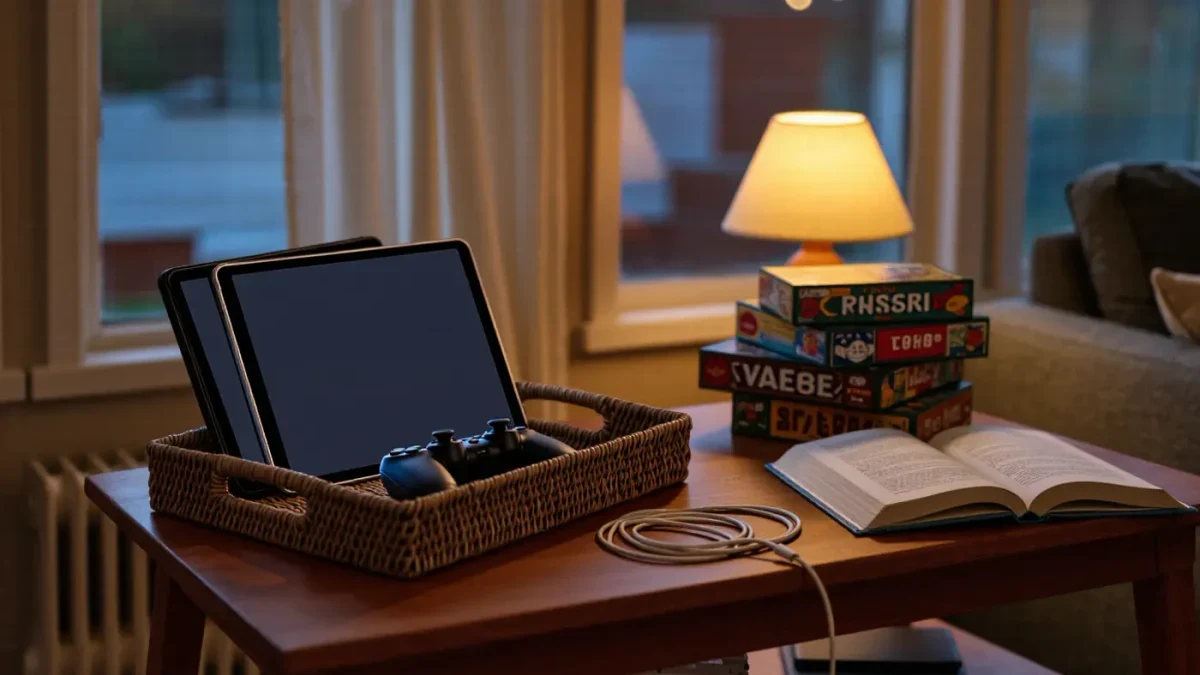
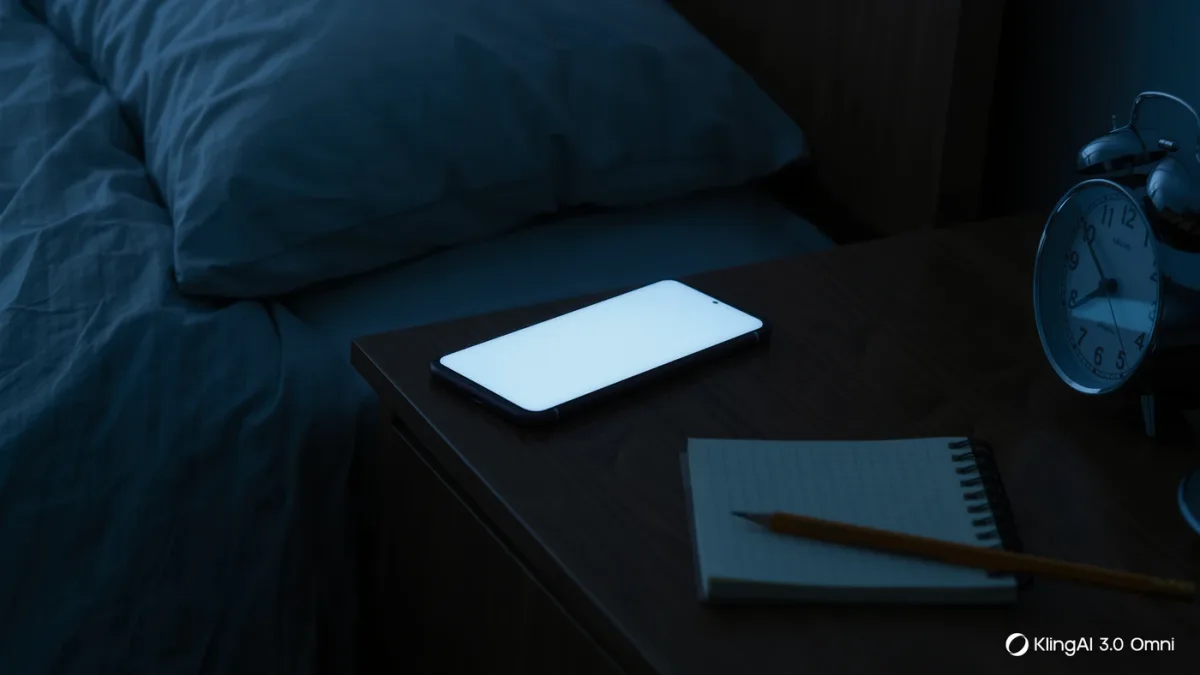
The documented stack, boring and effective. A hard content boundary before bed — the sleep-hygiene standard of a wind-down buffer, applied with chat's twist: assistants get closed with the laptop, not consulted from bed, because the phone-in-bed combination removes every remaining friction. Notification audit — nothing conversational may ping after a set hour, per the same channel-rights logic as focus settings. If you must think at night: a paper capture pad by the bed — write the question, not ask it — which preserves the offload (the thought is kept) without the interaction (the arousal and the next turn). And the honest accounting aid: the usage reports your phone already builds will show you what your bedtime chat habit actually is; most people's estimate and their dashboard disagree instructively.
What about the upsides people report?
Fairness again: some late-night chat use is genuinely wind-down — idle curiosity, gentle browsing, the day's loose ends tied off — and the research on arousal is about stimulating content, not screen presence per se. Some users report chatbots help with the racing-mind pattern that blocks sleep, by offloading tomorrow's worries to a written plan. The evidence-free zone is precision: which uses help and which harm is individual and unstudied, so the practical test is outcome-based — if your late sessions end with you asleep, they pass; if they end with you at 2 a.m. on the forty-first turn, the structure is failing and the boundary belongs in place. For persistent insomnia, the documented first-line treatments — sleep hygiene, CBT-I, and clinical evaluation — outperform any app, and Mayo Clinic's patient materials describe them plainly.
FAQ
- Do screens before bed really ruin sleep? Reviews find real but modest associations — mostly time displacement, plus light and arousal effects. Ruin is the wrong word; shave and delay are the right ones.
- Are chatbots worse than TV before bed? Unstudied directly, but structurally riskier: interactive, arousing, no natural endpoint, and time-distorting — the four properties bedtime media shouldn't have.
- What's the one change to make? Close the assistant with the laptop and keep the phone out of reach at bedtime; capture midnight questions on paper for the morning.